
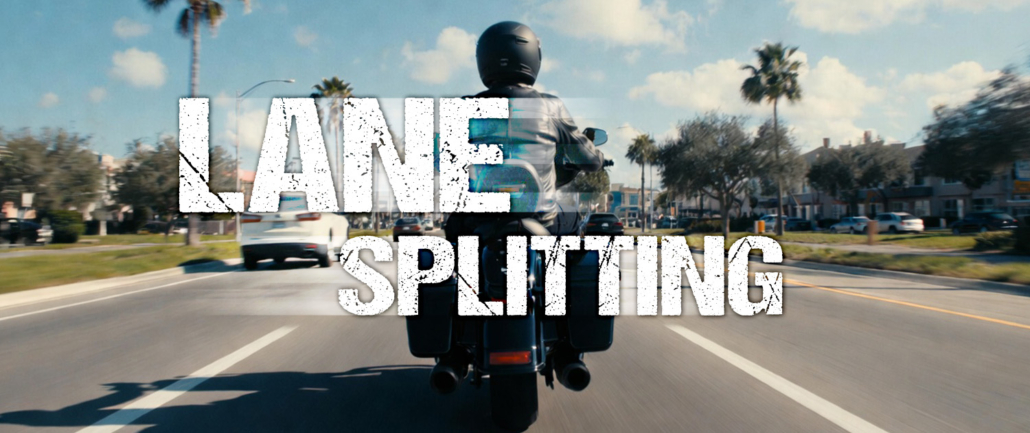
Lane Splitting in Florida
Illegal Does not Mean You Automatically Lose Your Injury Case
If you ride in South Florida — navigating the bustling streets of Miami, the highways of Broward, or the roads of Palm Beach — you’ve almost certainly heard the familiar warning repeated like a mantra: “Lane splitting is illegal in Florida.”
That much is absolutely true. Under Fla. Stat. § 316.209(2) (2025), a person may not operate a motorcycle between lanes of traffic or between adjacent lines or rows of vehicles.
But here’s the critical nuance that many riders, insurance adjusters, and even some attorneys too often oversimplify or overlook entirely:
Just because lane splitting is illegal does not automatically mean the injured motorcyclist loses the right to bring a claim or recover damages.
In a civil injury case, the central question goes far beyond whether the rider violated a traffic statute. The real issues are these: Who was negligent? What actions contributed to the crash? And what percentage of fault belongs to each party involved?
This is precisely where Florida’s comparative fault law becomes not just relevant — but decisive.
Florida Law on Lane Splitting
Florida law expressly prohibits lane splitting. The governing statute is Fla. Stat. § 316.209(2) (2025), which clearly states that a person may not operate a motorcycle between lanes of traffic or between adjacent lines or rows of vehicles.
As a starting point, there is no debate: lane splitting is unlawful in Florida.
That said, a traffic violation and a personal injury lawsuit operate in two entirely different arenas. A traffic ticket addresses one set of consequences. A civil claim for injuries demands a deeper, more nuanced analysis of negligence, causation, and comparative responsibility.
Florida Is a Comparative Fault State, And the Current Rule Matters
For decades, Florida has operated under a comparative negligence system, stemming from the landmark Florida Supreme Court decision in Hoffman v. Jones, 280 So. 2d 431 (Fla. 1973). Today, the controlling law is found in Fla. Stat. § 768.81 (2025), and understanding the current version is essential.
Under Fla. Stat. § 768.81 (2025):
- A plaintiff’s own contributory fault reduces their recoverable damages in direct proportion to their percentage of fault.
- The court enters judgment against each liable party according to that party’s percentage of fault.
- In most negligence actions, a plaintiff found to be more than 50 percent at fault for their own injuries is barred from recovering damages.
For motorcycle cases involving lane splitting, the practical implication is clear and powerful:
A rider who was lane splitting may still have a viable claim — and meaningful recovery — as long as their percentage of fault is determined to be 50% or less.
Lane splitting, therefore, is typically treated as a comparative fault issue rather than an automatic, case-ending bar.
Why Illegal Conduct Does Not Automatically Destroy the Civil Case
Florida negligence law is sophisticated enough not to treat every statutory violation as the death knell of a lawsuit.
In deJesus v. Seaboard Coast Line R.R. Co., 281 So. 2d 198 (Fla. 1973), the Florida Supreme Court made clear that the legal effect of violating a statute depends on the statute’s nature and purpose. In real terms, a traffic violation provides strong evidence of negligence, but it does not automatically resolve every question of causation and fault allocation in the case.
This principle is especially significant in lane-splitting crashes. Even when the motorcyclist violated Fla. Stat. § 316.209(2) (2025), the driver of the car may have engaged in independent negligent behavior that contributed to or caused the collision.
Common examples of driver negligence include:
- Changing lanes without checking blind spots or mirrors
- Turning across traffic without yielding the right-of-way
- Exiting a parking lot or driveway directly into moving traffic
- Failing to use a turn signal
- Drifting between lanes
- Stopping suddenly or moving unpredictably
- Operating the vehicle in a generally careless manner
When these actions occur, Florida law does not grant the driver automatic immunity simply because the motorcycle was filtering or splitting lanes.
Common Lane-Splitting Crash Scenarios Where the Driver May Still Be Liable
1. A Car Changes Lanes Into the Motorcycle
Florida law imposes a clear duty on drivers to remain in their lane until they can safely move. Fla. Stat. § 316.089(1) (2025) requires a driver to ascertain that a lane change can be made safely. Additionally, Fla. Stat. § 316.155(1) (2025) mandates an appropriate signal before changing lanes.
If a driver suddenly moves over without proper lookout, that driver may bear significant responsibility — even if the rider was lane splitting. The defense will emphasize the rider’s position. The rider’s side will stress the driver’s fundamental duty to execute a safe lane change. In many cases, this conflict creates a classic jury question on fault apportionment.
2. A Driver Pulls Out of a Parking Lot, Driveway, or Private Road
This scenario is painfully common in the dense urban and suburban areas of Broward, Miami-Dade, and Palm Beach counties.
Under Fla. Stat. § 316.125(2) (2025), any driver entering a roadway from a private road, driveway, alley, or building must yield to vehicles already on the roadway.
Whether leaving a shopping center, gas station, restaurant, condominium, office complex, or residential driveway, the driver carries the legal obligation to yield. Failure to do so can leave the driver exposed to liability, even when the motorcycle was lane splitting. The case often turns on whether the driver’s failure to yield was a substantial contributing cause of the crash.
3. A Driver Turns Without Proper Warning
Fla. Stat. § 316.155(1) (2025) prohibits turning or moving right or left unless the maneuver can be made with reasonable safety and after giving the proper signal.
When a driver turns unexpectedly across a rider’s path or abruptly occupies a gap without signaling, the rider may retain a strong negligence claim despite the lane-splitting violation.
4. General Careless Driving
Florida’s careless driving statute, Fla. Stat. § 316.1925 (2025), forbids operating a vehicle in a careless or imprudent manner without due regard for the safety of others and the circumstances.
This broader statute often proves valuable in cases where the driver’s overall conduct created danger, even if no single specific traffic rule captures the full picture.
What the Insurance Company Will Usually Argue
Insurance carriers handling these claims typically take an aggressive stance. They will assert that:
- The rider created the hazard by lane splitting
- The motorcycle was in an unexpected and unpredictable location
- The driver could not reasonably anticipate a bike traveling between lanes
- The rider was traveling too fast for conditions
- The lane-splitting violation was the primary or sole cause of the crash
These arguments carry weight and must be taken seriously. Their success depends heavily on the specific facts of the case, including traffic flow, speeds, signaling, visibility, road conditions, and available evidence like video footage or witness accounts.
What the Injured Rider Will Usually Argue
The rider’s position focuses on the driver’s independent duties of care. Evidence will typically show that the driver:
- Failed to yield when entering the roadway
- Changed lanes without ensuring the movement was safe
- Neglected to signal
- Drove while distracted or aggressively
- Operated the vehicle carelessly
- Violated the motorcyclist’s right to the full use of the lane under Fla. Stat. § 316.209 (2025)
Importantly, the rider does not need to prove they were faultless — only that their own percentage of fault does not exceed the 50% threshold under Fla. Stat. § 768.81 (2025) that would bar recovery.
The Real Litigation Question: Percentage of Fault
Most lane-splitting cases ultimately come down to how a jury or court allocates fault between the parties. Possible outcomes include findings that the driver was 100%, 80%, 60%, 50%, or less than 50% at fault.
Under Fla. Stat. § 768.81 (2025), these percentages dramatically impact the outcome:
Example 1 If total damages are $500,000 and the rider is found 20% at fault, the recoverable amount is typically $400,000.
Example 2 If total damages are $500,000 and the rider is 50% at fault, recovery drops to $250,000.
Example 3 If the rider is found 51% or more at fault, recovery is generally barred in a typical negligence action.
This is why the blanket statement “lane splitting is illegal, so you have no case” is both legally inaccurate and dangerously misleading to injured riders.
Important Distinction: Illegal Conduct Is Not Automatic Immunity for the Driver
One of the most persistent myths in motorcycle cases is that any wrongdoing by the rider completely absolves the driver. This is simply not how Florida negligence law functions.
A driver does not receive a free pass merely because the rider may have also been negligent. Comparative fault law exists specifically to address situations where multiple parties contribute to an accident.
In many real-world motorcycle crashes involving lane splitting, two things can be — and often are — simultaneously true: the rider should not have been splitting lanes, and the driver should not have changed lanes, turned, or entered traffic unsafely.
Evidence That Can Make or Break a Lane-Splitting Claim
Strong evidence is often more powerful than legal arguments alone. Key pieces of evidence frequently include:
- The official crash report
- Body-cam and dash-cam footage
- 911 recordings
- Photographs of the scene, lane markings, and final vehicle positions
- Surveillance video from nearby businesses
- Helmet-cam footage
- ECM/event data recorder information (when available)
- Patterns of vehicle and motorcycle damage
- Eyewitness statements
- Phone records (in distracted driving cases)
- Detailed scene measurements and skid mark analysis
Preserving and analyzing this evidence early — particularly through prompt scene investigation — can significantly strengthen a claim when the defense focuses on the rider’s speed and position.
What About a Traffic Citation?
A citation for lane splitting can certainly impact the case, but it is far from determinative. The civil injury claim requires a separate, comprehensive evaluation of negligence, causation, comparative fault, damages, and available insurance coverage.
Conversely, a driver who receives no citation can still be found negligent and liable in the civil lawsuit.
Practical Takeaway for South Florida Riders
If you are injured while lane splitting in Florida, do not automatically assume your case has no value. Instead, ask the right questions:
- Did the other driver also violate traffic laws?
- Did they fail to yield the right-of-way?
- Did they make an unsafe lane change?
- Did they fail to signal their intentions?
- Did they pull out suddenly from a parking lot or driveway?
- Were they distracted, aggressive, or careless?
- Can you demonstrate that the driver’s negligence was a substantial cause of the crash?
- Is it likely that your own percentage of fault will be found to be 50% or less?
These are the questions that determine whether a claim has real settlement value and whether pursuing litigation makes sense.
Bottom Line
Lane splitting remains illegal in Florida under Fla. Stat. § 316.209(2) (2025). However, that illegality alone does not automatically prevent an injured motorcyclist from pursuing a claim.
Thanks to Fla. Stat. § 768.81 (2025) and Florida’s comparative fault system, the case typically turns on a careful analysis of each party’s negligence. If the other driver negligently changed lanes, failed to yield, turned without warning, or drove carelessly, they may still bear legal responsibility for some or all of the damages.
In Florida motorcycle injury cases, the question is rarely simply “Was lane splitting illegal?”
The real questions are far more practical and important: Who caused this crash, and what percentage of fault does each person bear?

