
Grass Clippings on the Road and a Harley Crash in South Florida
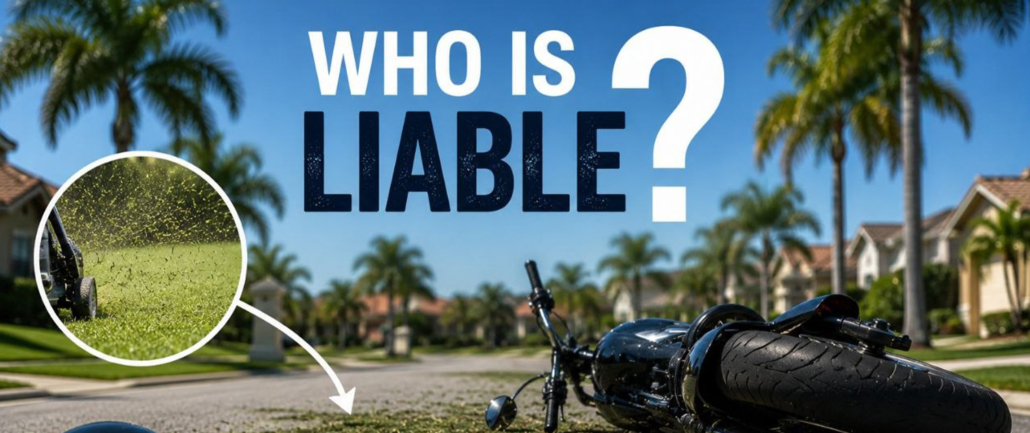
Can the Homeowner Be Liable?
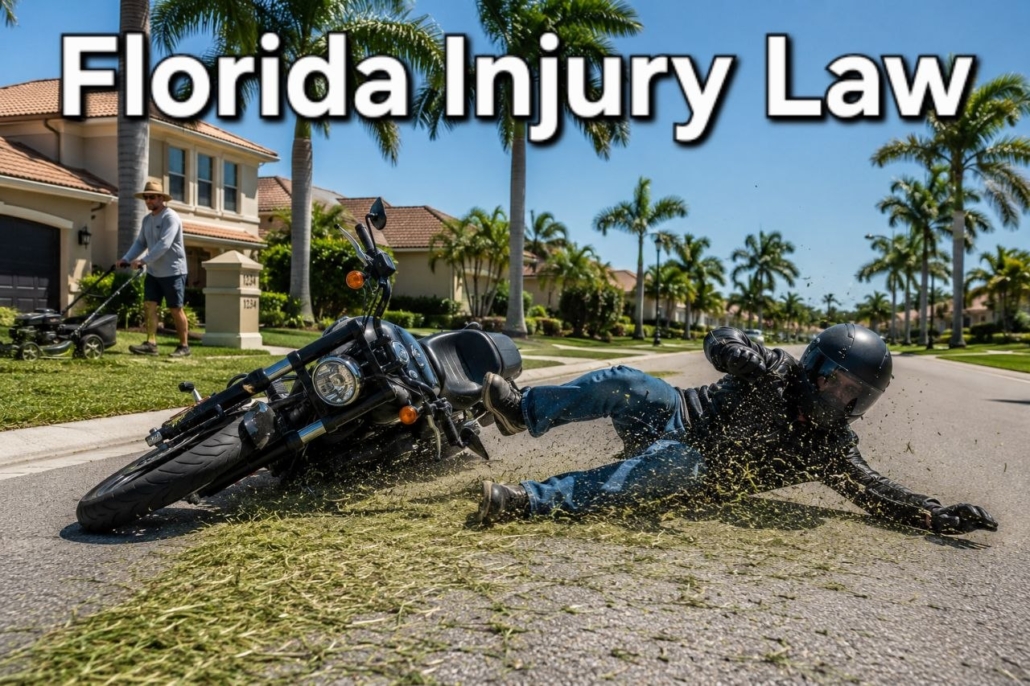
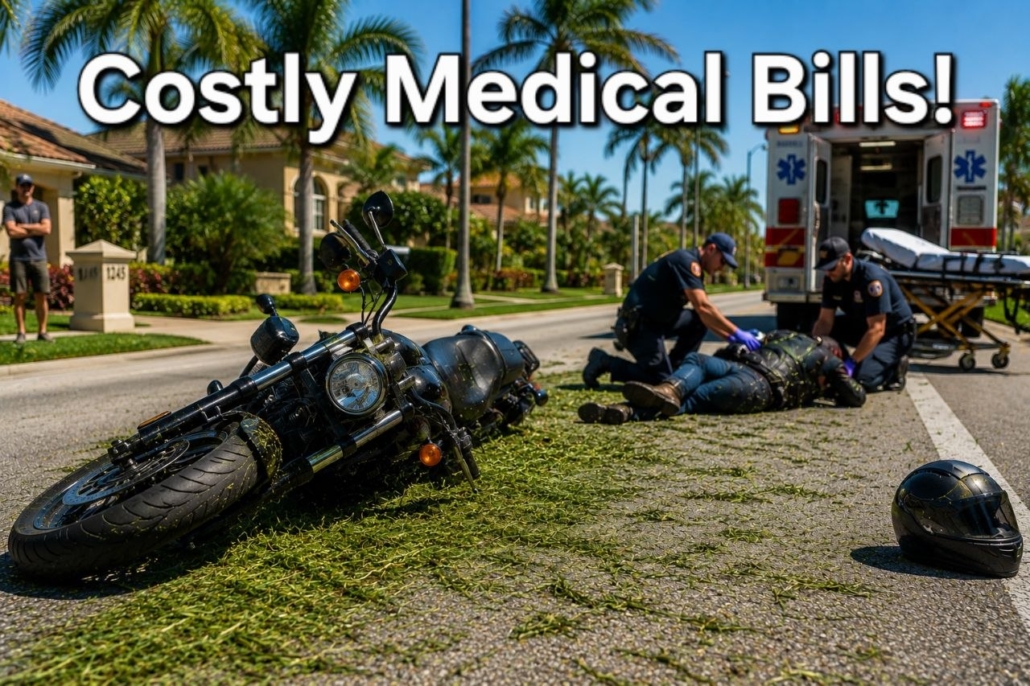
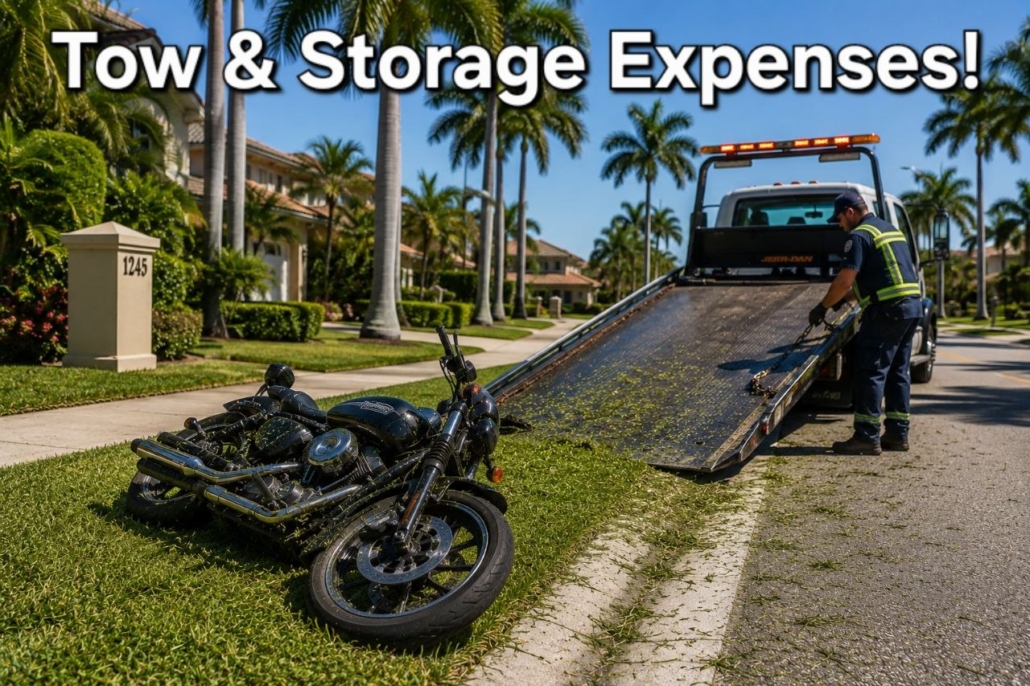
It is a bright, sunny day. A homeowner is cutting the grass at his house with a large front lawn. As he mows, grass clippings end up in the street in front of the property. A man riding a Harley-Davidson comes through, the motorcycle hits the grass clippings, loses traction, and the rider goes down hard. He is taken by ambulance to the hospital. His bike is towed away and storage charges start piling up while he is receiving treatment.
That hypothetical raises a question many people never think about until after a serious crash:
Can a homeowner be legally responsible if grass clippings in the roadway cause a motorcycle accident?
In Florida, the answer is potentially yes.
The Basic Florida Rule: If You Create a Foreseeable Road Hazard, You May Owe a Duty of Care
Florida negligence law generally asks whether a person’s conduct created a foreseeable zone of risk. If it did, that person may owe a duty to act with reasonable care to avoid harming others. That principle comes from McCain v. Fla. Power Corp., 593 So. 2d 500 (Fla. 1992).
In plain English, that means this: if a homeowner’s conduct creates a dangerous condition in a place where people are expected to travel, Florida law may impose a duty to use reasonable care.
A motorcycle rider is especially vulnerable to loose debris in the roadway. Grass clippings may seem harmless to a car driver, but to a biker they can act like a slick surface, especially in a turn, during braking, or when laid down in a heavy strip across the lane.
Under McCain v. Fla. Power Corp., 593 So. 2d 500 (Fla. 1992), the legal issue is not simply whether the homeowner owned the street. The real question is whether the homeowner’s conduct created a risk that made injury to passing motorists reasonably foreseeable.
When someone creates a hazardous condition in the roadway, liability can arise from creating the danger itself, even though the injury occurs off the person’s own land.
What Would the Injured Biker Have to Prove?
A Florida negligence claim usually requires proof of four things:
- Duty
- Causation
- Breach
- Damages
Here is how those elements would look in a grass-clipping motorcycle case.
What the biker would argue?
The homeowner created a foreseeable risk by placing or leaving grass clippings in the street. A reasonable person would not leave slick clippings in the lane of travel without cleaning them up or warning others. The Harley lost traction because of the clippings, causing the rider to crash. The rider suffered bodily injury, medical bills, pain and suffering, motorcycle damage, towing charges, and storage fees.
Is the Homeowner Automatically Liable?
No. This is not automatic liability.
Even if grass clippings were in the roadway, the injured rider still must prove that:
- the clippings were actually there;
- they were substantial enough to create a dangerous condition;
- they caused the loss of traction; and
- the homeowner acted unreasonably under the circumstances.
That means the details matter.
Facts that would strengthen the biker’s case
The claim is stronger if the evidence shows:
- a heavy amount of fresh clippings in the lane of travel;
- clippings spread across a part of the road used by vehicles or motorcycles;
- the homeowner finished mowing and simply left the clippings there;
- no effort was made to sweep, blow, or remove the clippings;
- the crash happened immediately where the clippings were present;
- witnesses, photographs, or police observations tie the crash directly to the clippings.
Facts that would strengthen the homeowner’s defense
The defense is stronger if the evidence shows:
- only a light, minimal amount of clippings near the curb;
- the rider was speeding or riding aggressively;
- the clippings were open and obvious in bright daylight;
- the rider braked sharply or lost control for some other reason;
- the homeowner was still actively mowing and had not yet had a reasonable chance to clean up.
What If the Grass Was Only Temporary While He Was Mowing?
That helps the homeowner, but it does not end the case.
If the homeowner was actively mowing and the clippings had only been in the street for a short time, a jury may decide the condition was momentary and not unreasonable. On the other hand, a jury could still find negligence if the homeowner was discharging large amounts of slick grass directly into the roadway while traffic was passing.
So the fact that the grass was “temporary” is relevant, but it is not a complete defense.
A key question would be:
Did the homeowner create an unreasonably dangerous condition for passing traffic, even if only for a short time?
Under McCain v. Fla. Power Corp., 593 So. 2d 500 (Fla. 1992), that remains a fact-driven negligence question.
What If He Stopped Cutting the Grass and Left It in the Street All Day?
That is much worse for the homeowner.
If the grass clippings remained in the roadway for hours after mowing ended, the injured rider’s case becomes significantly stronger. Why? Because leaving the clippings there suggests:
- the homeowner had time to notice the condition;
- the homeowner had time to fix it;
- the homeowner failed to remove a foreseeable traffic hazard.
That kind of fact pattern makes it easier for the injured person to argue both breach of duty and causation.
In other words, there is a big difference between:
- a few minutes of incidental clippings during active lawn work, and
- a hazard left in the street all afternoon.
Does It Matter If the Homeowner Was Cited for the Grass Clippings?
Yes, but a citation is helpful evidence, not necessarily the whole case.
If the homeowner was cited under a Florida statute, county code, or municipal ordinance for placing debris, yard waste, or unsafe material in the roadway, that citation may support the injured rider’s negligence claim.
Florida law distinguishes between:
- a violation that amounts to negligence per se, and
- a violation that is merely evidence of negligence.
The Florida Supreme Court addressed that distinction in deJesus v. Seaboard Coast Line R.R. Co., 281 So. 2d 198 (Fla. 1973). Under deJesus v. Seaboard Coast Line R.R. Co., 281 So. 2d 198 (Fla. 1973), whether a statutory or ordinance violation is negligence per se depends on the purpose of the law and whether it was designed to protect a particular class of persons from the kind of harm that occurred.
So if a homeowner is cited for leaving hazardous yard debris in the street, that could be powerful evidence that he acted unreasonably.
But what if there was no citation?
A lack of citation does not mean there is no civil case.
Civil negligence claims do not depend on whether a police officer or code officer wrote a ticket. A plaintiff can still prove the case with:
- eyewitness testimony;
- photographs or video;
- the crash report;
- admissions by the homeowner;
- accident reconstruction;
- evidence from the scene showing fresh clippings where the bike slid out.
What About the Motorcyclist’s Own Speed?
That matters a lot.
In the hypothetical, the Harley “sped by.” If the rider was traveling too fast for the conditions, Florida’s comparative negligence statute could reduce or even bar recovery.
Florida now follows a modified comparative negligence system in most negligence cases under Fla. Stat. § 768.81. If the injured plaintiff is found to be more than 50% at fault, recovery is barred. If the plaintiff is 50% or less at fault, damages are reduced by that percentage.
So if a jury finds:
- the homeowner was negligent for leaving clippings in the road, and
- the rider was also negligent for excessive speed,
the jury will apportion fault between them under Fla. Stat. § 768.81.
That means even a good liability case can be reduced substantially if the biker was riding carelessly.
Policy issues that may matter
Coverage is always policy-specific. Issues may include:
- whether the event qualifies as an “occurrence”;
- whether any exclusion applies;
- whether the insurer argues the claim arose from motor vehicle use;
- whether the lawn equipment involved affects coverage;
- whether the conduct was accidental rather than intentional.
Still, from a practical standpoint, a claim against the homeowner’s liability coverage is often the main insurance path in a grass-clipping roadway case.
How Does Uninsured Motorist Coverage Work Here?
This is where many people get confused.
The biker in this hypothetical has $100,000 in Uninsured Motorist coverage. But that does not automatically mean the UM policy will pay.
Florida’s UM statute, Fla. Stat. § 627.727, generally protects insured persons who are legally entitled to recover damages from the owners or operators of uninsured motor vehicles because of bodily injury.
That is the key problem in this scenario.
Here, the claim is not really that an uninsured vehicle caused the crash. The claim is that a homeowner created a dangerous road condition by leaving grass clippings in the street.
So in most cases, UM coverage under Fla. Stat. § 627.727 would probably not apply to this fact pattern.
Why UM usually does not fit this scenario
UM is designed for cases involving:
- an uninsured at-fault driver;
- a hit-and-run vehicle in certain circumstances;
- bodily injury caused by the owner or operator of an uninsured motor vehicle.
A homeowner mowing a lawn and leaving clippings in the road usually does not fall into that category.
Could UM ever become relevant?
Possibly, but only if additional facts change the analysis. For example:
- an unidentified vehicle created the debris hazard;
- an uninsured landscaping truck caused the dangerous condition through vehicle operation;
- the policy has unusual language extending beyond the statute.
But on the basic facts described here, the homeowner’s liability coverage is usually the more natural target than the biker’s UM coverage.
What Damages Could the Biker Claim?
If liability is proven, damages may include:
- emergency transport and hospital bills;
- follow-up medical treatment;
- lost income;
- pain and suffering;
- damage to the Harley-Davidson;
- towing charges;
- reasonable storage charges while the rider was hospitalized.
The storage-fee issue often becomes important in motorcycle cases because the bike may sit in a tow yard while the injured rider is receiving treatment.
A Practical Summary
Here is the short version:
Can the man cutting the grass be liable? Yes, potentially, if he created a foreseeable roadway hazard and that caused the crash. Does it matter if the grass was only temporary? Yes. Temporary clippings during active mowing help the defense, but do not automatically defeat the claim.What if he left the grass in the street all day? That makes the case against the homeowner much stronger. Does a citation matter? Yes. It can help prove negligence, but it is not required.What if there was no citation? The biker can still bring a civil claim with other evidence. Does UM coverage apply? Usually not on these facts, because there was no uninsured motor vehicle causing the crash in the usual sense of Fla. Stat. § 627.727. Can the biker make a claim on the homeowner’s policy? In many cases, yes, subject to the policy’s terms and exclusions.
Bottom Line
In Florida, a homeowner who leaves grass clippings in the roadway can face liability if those clippings cause a motorcycle to lose traction and crash. The legal analysis will usually turn on standard negligence principles under McCain v. Fla. Power Corp., 593 So. 2d 500 (Fla. 1992), comparative fault under Fla. Stat. § 768.81, and the available insurance coverage under the homeowner’s policy and Fla. Stat. § 627.727.
The shorter the condition existed, the better the defense. The longer it remained in the roadway, the stronger the liability claim. A citation helps, but it is not essential. And while many injured riders assume their UM coverage will step in, that is usually not how Florida UM works in a homeowner-created road hazard case.
This article is for general educational purposes only and does not create an attorney-client relationship.

