

Florida Almost Made You a Criminal Over a License Plate Frame
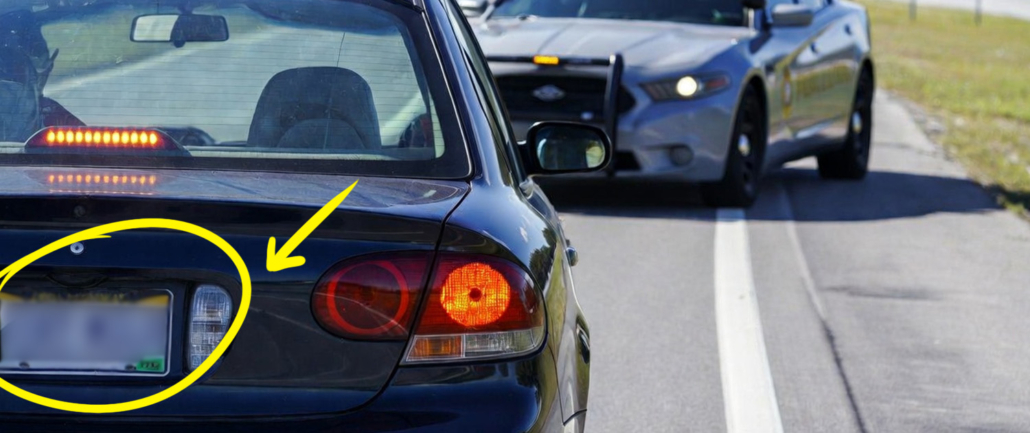
Here’s What Really Happened!
On October 1, 2025, Florida significantly changed how license plate visibility is regulated. What had once been a minor equipment violation suddenly became a criminal misdemeanor under new state law, and that caused massive confusion across the state, particularly about whether common license plate frames were now illegal.
Background: What the Law Was Before October 1, 2025
Under Florida law before 2025, obscuring a license plate was treated as a non-criminal traffic infraction, similar to equipment violations like a broken taillight. The focus was on preventing intentional concealment of the plate number or validation stickers that would interfere with law enforcement or automated systems reading a tag. Standard decorative frames, including those sold by dealerships or for personal expression, were commonly used as long as they didn’t make numbers or stickers hard to read.
What Changed Effective October 1, 2025
In 2025, the Florida Legislature enacted a statute restructuring the rules around license plate obscuring devices — including frames or covers — and elevated violations from a civil traffic offense to a criminal misdemeanor if a device obscures the plate’s “primary features.” The law is found in Florida Statute § 320.262 and took effect October 1, 2025.
Under this new statute:
- Any device (mechanical, electronic, manual) that covers, obscures, or interferes with the license plate number or validation sticker is prohibited.
- This includes devices designed to defeat cameras, toll-booth readers, or law enforcement recognition.
- Violations can be charged as a second-degree misdemeanor, punishable by fines or even jail time.
Because terms like “obscures” were not specifically defined in the statute, many law enforcement agencies took an overly broad interpretation, and suddenly started issuing tickets for any license plate frame that touched any printed part of a plate, including decorative frames that had been in use for years. Hundreds of drivers received warnings and citations for frames that merely overlapped borders or covered text like the state name or county information. This fueled public alarm and headlines claiming “license plate frames are illegal in Florida.”
Example: What People Were Being Ticketed For
Many drivers reported stops and warnings simply for roadside law enforcement saying a frame “covered too much of the plate,” even though the alphanumeric characters and validation decals were still visible. Videos posted by sheriff’s offices, social media posts, and articles repeated claims that every frame was now banned, causing widespread fear and confusion.
This wasn’t just cars. Motorcycle owners worried too: Florida requires only a rear plate on bikes, and custom frames that wrap around or border those smaller tags were suddenly perceived as possible criminal violations.
The Official Clarification by FLHSMV
Recognizing the confusion, on December 12, 2025, the Florida Department of Highway Safety and Motor Vehicles (FLHSMV) issued a memo and public guidance to all Florida law enforcement agencies clarifying how the law should be applied.
The key takeaways from the FLHSMV clarification are:
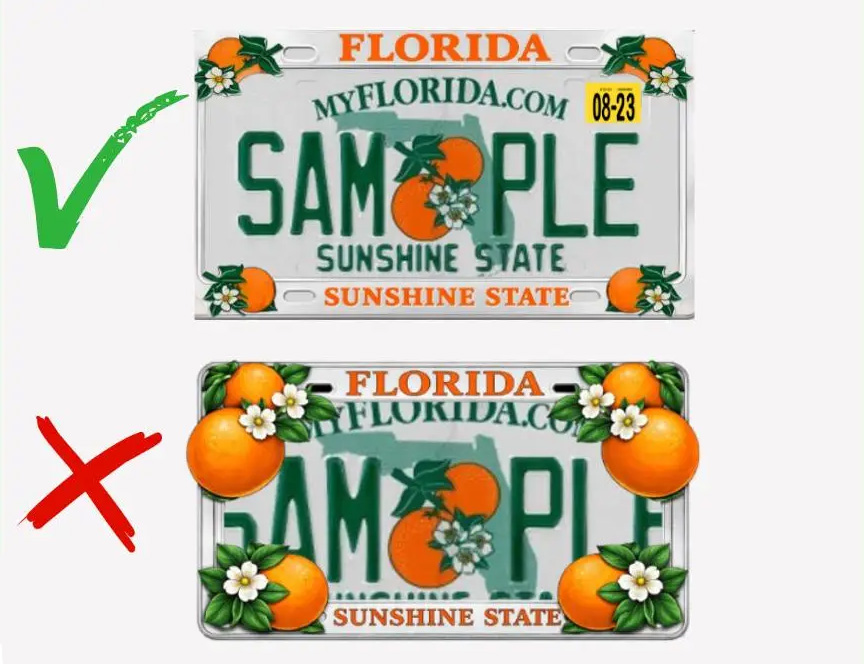
- License plate frames are not banned. You may still use a decorative or standard frame.
- A frame is legal so long as it does not obscure the alphanumeric plate number or the registration validation sticker.
- The agency specifically stated that information on the bottom of a Florida plate (such as county names or slogans) is not considered a primary feature, so a frame covering that area is permitted.
- The only prohibited devices are those that impair law enforcement’s ability to read the plate number or validation decal or are intended to defeat detection systems (like red-light cameras, toll readers, etc.).
Put simply: If law enforcement can read your tag number and validation sticker from a lawful vantage point, your frame is compliant. Covering the decorative text on the bottom does not make the frame illegal.
Why the Clarification Was Necessary
The statute’s language targets devices that actively or intentionally obscure primary identifying details. That’s a very different legal standard than saying “no frame that touches any part of the plate is allowed.” The initial wave of enforcement often conflated these two standards.
By issuing the memo, FLHSMV ensured:
- Law enforcement agencies statewide apply a consistent interpretation.
- Everyday decorative frames remain lawful.
- Enforcement focuses on true obscuring devices, not harmless accessories.
What This Means for Motorcycle Owners
Florida uses only rear plates for most motorcycles, making plate visibility particularly important for identification and automated systems. The same legal rule applies:
- A motorcycle plate frame is permitted so long as it does not obscure the plate number or validation sticker.
- A frame that merely covers bottom displayed information but leaves the key features clear is lawful under the clarification.
In practice, that means:
- Slim, decorative frames fitting around the tag margins are typically okay.
- Bulkier devices that block part of the plate number, validation decals, or dull visual clarity can still be ticketed.
Practical Tips to Stay Compliant
- Inspect your plate from about 50–100 feet to confirm the number and sticker are clearly readable.
- Avoid tinted or mirrored covers, which can distort visibility even if numerals aren’t covered.
- If pulled over for a frame, document the tag’s visibility with photos, because lawful visibility is your strongest defense.

